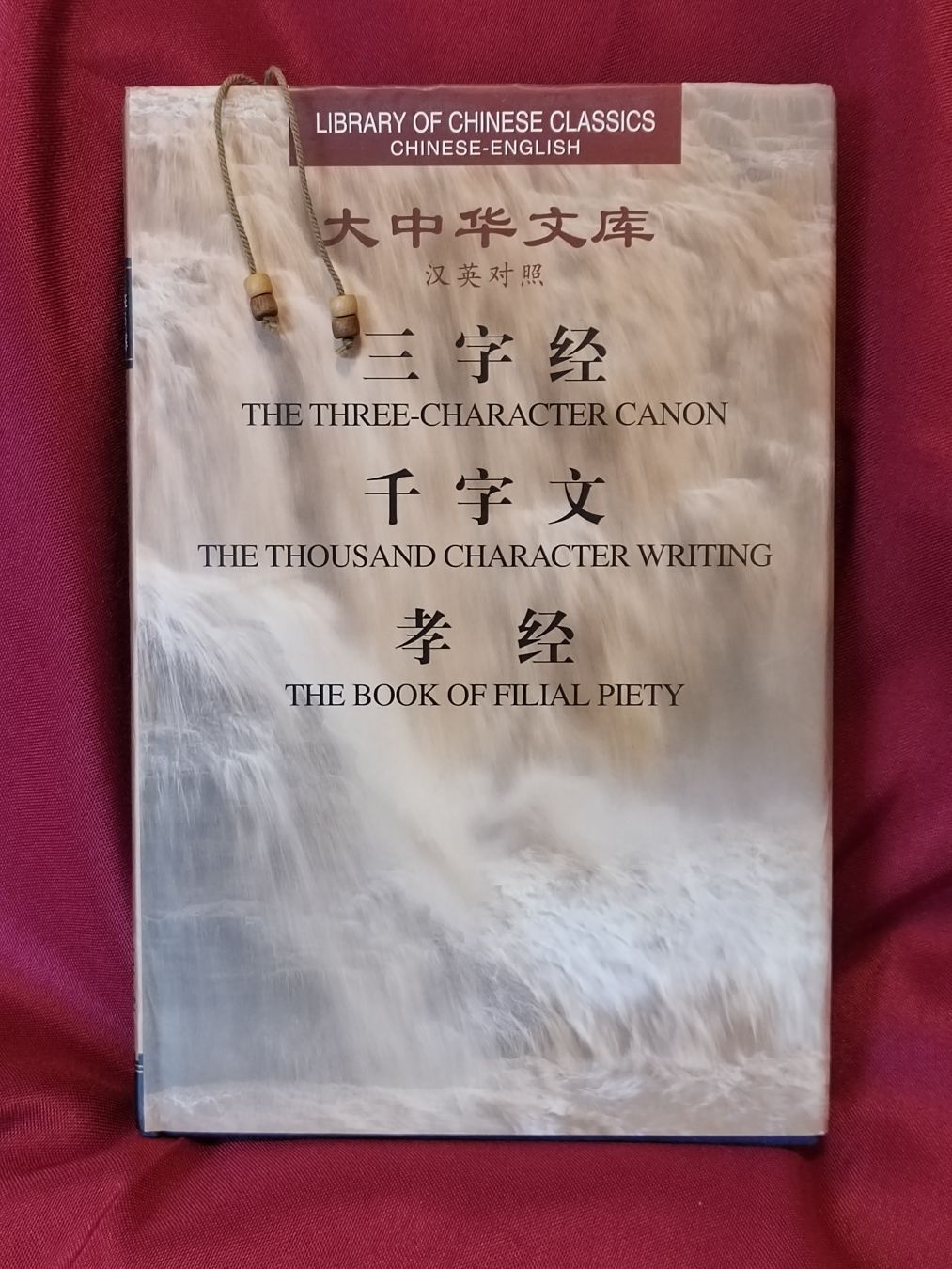
三字经 (The Three Character Classic), 千字文 (The Thousand Character Classic), and 孝经 (The Classic of Filial Piety) are three important texts in traditional Chinese education and culture.
The Three Character Classic is a concise text written in the 13th century, primarily attributed to Wang Yinglin. It consists of three-character verses that are easy to memorize and was used as a primer for children's education. The text covers:
Basics of Chinese history and dynasties
Confucian moral values
Elements of math, science, and music
Core Confucian …
三字经 (The Three Character Classic), 千字文 (The Thousand Character Classic), and 孝经 (The Classic of Filial Piety) are three important texts in traditional Chinese education and culture.
The Three Character Classic is a concise text written in the 13th century, primarily attributed to Wang Yinglin. It consists of three-character verses that are easy to memorize and was used as a primer for children's education. The text covers:
Basics of Chinese history and dynasties
Confucian moral values
Elements of math, science, and music
Core Confucian teachings, such as the innate goodness of human nature
It was widely used during the Ming and Qing dynasties as a foundational text for elementary education.
The Thousand Character Classic is a unique text containing 1,000 distinct Chinese characters, each used only once to form a coherent essay. Key features include:
Covers topics such as philosophy, human nature, and the way of the world
Emphasizes the value of time and personal character development
Provides an introduction to Chinese legends and worldview
The Book of Filial Piety is a Confucian text focusing on social relationships, particularly between father and son. It is characterized by:
Short length, containing fewer than 2,000 Chinese characters
Simple language, making it accessible for young learners
Emphasis on filial piety (孝/xiao) as a fundamental virtue in Chinese culture
Discussion of how filial piety extends to various social relationships and even cosmic order
This book contains the full text of all three works in Classical Chinese. The first also has a translation into English while the second has a transcription into English followed by an attempt at idiomatic translation after each stanza. The final is trilingual providing in addition to the original text a translation into modern vernacular Chinese and English.