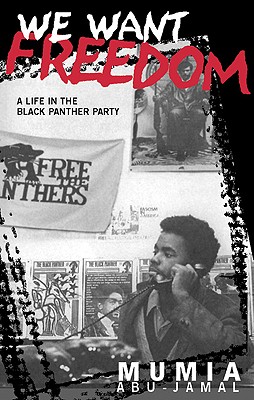
In his youth Mumia Abu-Jamal helped found the Philadelphia branch of the Black Panther Party, wrote for the national newspaper, and began his life-long work of exposing the violence of the state as it manifests in entrenched poverty, endemic racism, and unending police brutality and celebrating a people’s unending quest for freedom. In We Want Freedom, Mumia combines personal experience with extensive research to provide a compelling history of the Black Panther Party—what it was, where it came from, and what rose from its ashes. Mumia also pays special attention …
In his youth Mumia Abu-Jamal helped found the Philadelphia branch of the Black Panther Party, wrote for the national newspaper, and began his life-long work of exposing the violence of the state as it manifests in entrenched poverty, endemic racism, and unending police brutality and celebrating a people’s unending quest for freedom. In We Want Freedom, Mumia combines personal experience with extensive research to provide a compelling history of the Black Panther Party—what it was, where it came from, and what rose from its ashes. Mumia also pays special attention to the U.S. government’s disruption of the organization through COINTELPRO and similar operations.
While Abu-Jamal is a prolific writer and probably the world’s most famous political prisoner, this book is unlike any of Mumia’s previous works. In We Want Freedom, Abu-Jamal applies his sharp critical faculties to an examination of one of the U.S.’s most revolutionary and most misrepresented groups. A subject previously explored by various historians and forever ripe for "insider" accounts, the Black Panther Party has not yet been addressed by a writer with the well-earned international acclaim of Abu-Jamal, nor with his unique combination of a powerful, even poetic, voice and an unsparing critical gaze. Abu-Jamal is able to make his own Black Panther Party days come alive as well as help situate the organization within its historical context, a context that included both great revolutionary fervor and hope, and great repression. In this era, when the US PATRIOT Act dismantles some of the same rights and freedoms violated by the FBI in their attack on the Black Panther Party, the story of how the Party grew and matured while combating such invasions is a welcome and essential lesson.
Overwhelmingly, I don't want to comment too much on what was written. It's an interesting memoir that I think speaks largely for itself. There's a lot of areas where I wish more analysis took place and less apologetics for their behaviours. (For example: Yes, I do agree and believe that the intelligence agencies of the State were fucking with people to cause problems, but I also think that if those people didn't have certain views of their roles and of how things should be structured... some of it would've worked less well—I also highlight this because it makes it easy for things that should be cause for concern to go overlooked because people will claim they're being whatever-jacketed when they really aren't.)