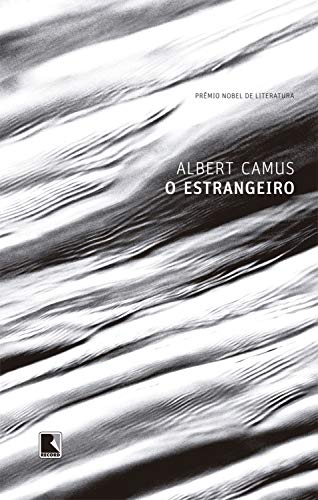
Mais conhecida e importante obra de ficção de Albert Camus.
Este livro narra a história de um homem comum que se depara com o absurdo da condição humana depois que comete um crime quase inconscientemente. Meursault, que vivia sua liberdade de ir e vir sem ter consciência dela, subitamente perde-a envolvido pelas circunstâncias e acaba descobrindo uma liberdade maior e mais assustadora na própria capacidade de se autodeterminar. Uma reflexão sobre liberdade e condição humana que deixou marcas profundas no pensamento ocidental. Uma das mais belas narrativas deste século.
The book is initially quite weird to start. Most of the sentences are short and clipped, and it largely feels like reading an ongoing journal of a select few days in a person's life. In fact, I quite like that structure; it's not something that I've really encountered before.
I also find it interesting for the questions that it poses, particularly with regards to the subject of a life and their experiences. Beyond that, I can't really write a review for it; there's a lot that I still want to digest and revisit at a later date.
A Sunburned Soul: Confronting Absurdity in Camus’ The Stranger
5.0 stars
Reading The Stranger by Albert Camus left me both unsettled and oddly calm — like staring into a bright, empty sky and realizing it has no answers. Originally published in 1942, this novel is often seen as the embodiment of Camus’ philosophy of the absurd, and with good reason.
The story follows Meursault, a French-Algerian clerk who reacts to life’s most significant events — his mother’s death, a romantic relationship, even a murder — with unsettling emotional detachment. His indifference is not cruelty, but a radical honesty: he simply refuses to pretend that life has inherent meaning.
When Meursault shoots an unnamed Arab man under the blazing Algerian sun, it feels less like a crime of passion than an existential rupture. What follows is not just a murder trial, but a trial of Meursault’s character, his lack of faith, his refusal to lie about grief or belief. Society, …
Reading The Stranger by Albert Camus left me both unsettled and oddly calm — like staring into a bright, empty sky and realizing it has no answers. Originally published in 1942, this novel is often seen as the embodiment of Camus’ philosophy of the absurd, and with good reason.
The story follows Meursault, a French-Algerian clerk who reacts to life’s most significant events — his mother’s death, a romantic relationship, even a murder — with unsettling emotional detachment. His indifference is not cruelty, but a radical honesty: he simply refuses to pretend that life has inherent meaning.
When Meursault shoots an unnamed Arab man under the blazing Algerian sun, it feels less like a crime of passion than an existential rupture. What follows is not just a murder trial, but a trial of Meursault’s character, his lack of faith, his refusal to lie about grief or belief. Society, it seems, is more disturbed by his honesty than his violence.
What struck me most was the clarity of Camus’ prose. The sentences are clean and sharp, mirroring Meursault’s view of the world: unembellished, immediate, free of illusion. It’s a language that leaves no room to hide — from death, from truth, or from ourselves.
For me, The Stranger is less about a man on trial than about what it means to live authentically in an indifferent universe. It’s not comforting, but it is liberating.