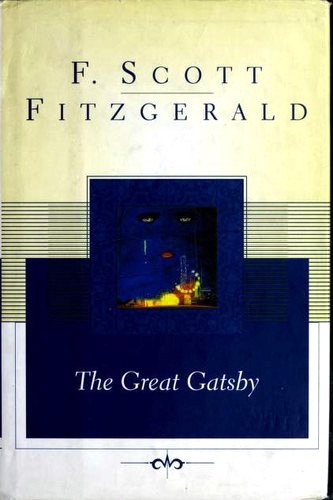

Gertie MacDowell reviewed The Great Gatsby by Francis Scott Fitzgerald (Everyman's Library Classics)
Gatsby might be 'great' but the book he's in is not.
3.0 stars
I freely admit that what finally got me to read this after so long was an article in The New York Times where it is described as a 'quick read' at barely 200 pages and possible to get through in an afternoon. I did not use an entire afternoon, but had a few evenings and therefore found myself reading about Jay Gatsby for the first time at the centenary of his emergence.
My first thought was that the book is quite funnier than I'd imagined. Fitzgerald loves to throw in lines for Nick Carraway that capture the silliness that surrounds him. This made the book a far more amusing read than I had anticipated and helped keep my interest throughout.
As a story, The Great Gatsby is terribly straightforward. There's little in the way of ingenuity per se, and it is the characters, their setting, the culture that …
I freely admit that what finally got me to read this after so long was an article in The New York Times where it is described as a 'quick read' at barely 200 pages and possible to get through in an afternoon. I did not use an entire afternoon, but had a few evenings and therefore found myself reading about Jay Gatsby for the first time at the centenary of his emergence.
My first thought was that the book is quite funnier than I'd imagined. Fitzgerald loves to throw in lines for Nick Carraway that capture the silliness that surrounds him. This made the book a far more amusing read than I had anticipated and helped keep my interest throughout.
As a story, The Great Gatsby is terribly straightforward. There's little in the way of ingenuity per se, and it is the characters, their setting, the culture that surrounds them, and the choices they make that serve as the real interest of the novel. Hindsight also aids in this regard as Nick becomes a 'bond man' like so others in New York City and from this vantage point, that seems like a fatalistic choice given what happened at the end of the decade. Not before Nick gives it up, but it gives the novel an extra sheen of cluelessness that has only become brighter as the years go by.
None of the characters particularly appealed to me. Yes, Gatsby is the most interesting but then his intrigue is half the point of the whole book. Everyone else is quite two-dimensional either interested in money, or the trappings of it. There's so little given to their motivations and thoughts its kind of frustrating. (That said, there is a scene towards the end where Fitzgerald brilliantly, and through only describing the physical scene, shares what Daisy and Tom are thinking.)
I can see why it's a favourite of schools. It's short, has a simple enough story, and embodies enough themes that can be related to by young readers otherwise ignorant of the world. Is that the sum of its worthiness in the literary world? I don't think so, but I don't think the Great Gatsby is near the paragon of 20th century literature, or even Jazz Age literature for that matter.
Overall, three stars for being amusing enough to read straight through, but really, this is just a book to check off your list.