Falko finished reading Die Känguru Rebellion by Marc-Uwe Kling (Die Känguru-Chroniken, #5)

Hey Leute, aufgepasst, keine Fake News, es ist wirklich wahr: neue Geschichten vom Känguru und …
Ich rebelliere jetzt auch gegen die Zustände! ✊

reading mostly non-fictional books to learn new stuff. But occasionally I'm reading Sci-Fi and History.
This link opens in a pop-up window
83% complete! Falko has read 5 of 6 books.
Hey Leute, aufgepasst, keine Fake News, es ist wirklich wahr: neue Geschichten vom Känguru und …
Ich rebelliere jetzt auch gegen die Zustände! ✊
Hey Leute, aufgepasst, keine Fake News, es ist wirklich wahr: neue Geschichten vom Känguru und …
Oda vülleicht nich nächste Woche, da mach ick Urlaub inner Uckermark. Ick weeß, klingt traurich, wenn man dit so sacht, aba da jibt's janz schöne Ecken, teils mit janz wenisch Menschen, teils weniga Menschen als Windkraftanlagen.
— Die Känguru Rebellion by Marc-Uwe Kling (Die Känguru-Chroniken, #5) (Page 190)
Herta hat #Uckermark jesacht <3
Hey Leute, aufgepasst, keine Fake News, es ist wirklich wahr: neue Geschichten vom Känguru und …
Hey ho, let's go
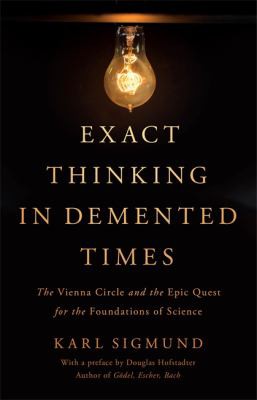
The philosophy of science between the two world wars, 1920s-1930s.
Very interesting and insightful read about so many great minds and their lives as it converged and evolved around Vienna in the 1920-30s
The philosophy of science between the two world wars, 1920s-1930s.
The philosophy of science between the two world wars, 1920s-1930s.
Einstein himself used to joke: I go to my office just to have the privilege to walk home with Kurt Gödel. Or perhaps it was not even a joke at all.
— Exact thinking in demented times by Karl Sigmund (Page 343)
The greatest intellectual friendship since Plato and Socrates
@Teufel100 welches Buch würdest Du haben wollen?
The philosophy of science between the two world wars, 1920s-1930s.
Marooned in Vienna, Olga Taussky found no job. But Hahn and Menger decided to do something about it. They organized a series of public lectures on science. The entrance fees were hefty—roughly in the same price range as opera tickets. With the proceeds, the two mathematicians were able to finance a stipend for their friend and colleague Olga Taussky.
— Exact thinking in demented times by Karl Sigmund (Page 230)
Lads, this was allyship back in 1920s in Vienna.
Hey Leute, aufgepasst, keine Fake News, es ist wirklich wahr: neue Geschichten vom Känguru und …
fix bei Lehmann's an der Charité gekauft und schon mal kurz reingeschaut. Dit wird lustig.
The philosophy of science between the two world wars, 1920s-1930s.
Johnny understood everything at first try. There was nobody in the world who could think any faster than he. And what he had just realized, in a blinding flash, was that Gödel’s discovery had totally exploded his prior worldview. All at once, von Neumann understood that there exist true mathematical statements that cannot be derived by formal means from a set of axioms.
— Exact thinking in demented times by Karl Sigmund (Page 222)
If I had a Time Machine, that would have been an event I would want to witness in person.
The philosophy of science between the two world wars, 1920s-1930s.
It is reputed that one time, when Einstein had just given a talk on a daring new idea, the teenage prodigy blurted out, in front of the entire lecture hall, “Was Herr Einstein gesagt hat ist nicht so blöd.” (“What Mr. Einstein just said is not so foolish.”)
— Exact thinking in demented times by Karl Sigmund (Page 203)
Wolfgang Pauli aged 18 at that time. Hihi
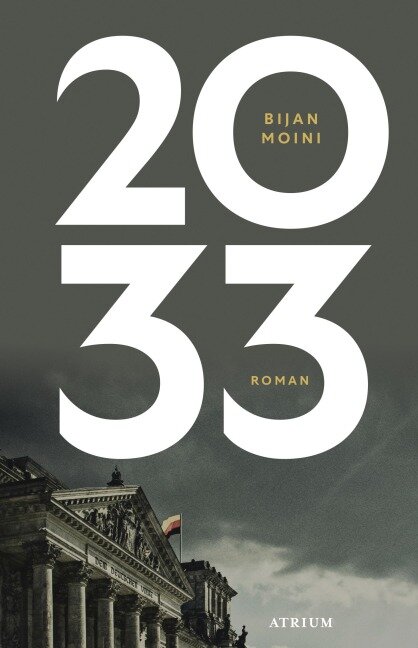
Deutschland, 2033. Die rechtsextreme Partei AUFSTAND stellt die Bundeskanzlerin. Als die junge Anwältin Marie Wigand …
Because @ennopark@mastodon.social said this book of @bijanmoini.de@bsky.brid.gy is a page turner.

Thanks @slamr@hub.uckermark.social
The philosophy of science between the two world wars, 1920s-1930s.
Now forty years old, Wittgenstein returned for a short while to Cambridge and at long last earned his doctorate in philosophy. For his PhD thesis, he submitted the now world-famous Tractatus. His examiners were Professors Russell and Moore, his old friends from the prewar years. The oral defense seemed like a farce to all three, and it was brief. As the story goes, Wittgenstein got up after a few minutes, patronizingly patted the shoulders of his examiners, and said: “Don’t worry, you’ll never understand it.”
— Exact thinking in demented times by Karl Sigmund (Page 135)
Bold Wittgenstein
The philosophy of science between the two world wars, 1920s-1930s.
“Logic therefore does not say anything about the world; it only has to do with the way in which I talk about the world.”
— Exact thinking in demented times by Karl Sigmund (Page 132)
Hans Hahn quote on logic